
 UC
UCTeya Dora
Teya Dora, an exceptional artist from Belgrade, Serbia, has taken the music world by storm with her hit single "Džanum," amassing 110+ million global streams. Her musical journey began alongside her father, exploring Serbian folk, Western rock, and pop as a child. Today, she blends modern pop, R&B, Balkan influences, and her native Serbian language. She started playing the piano at age 5, took opera lessons, and won a music scholarship to Berklee College of Music at 16. She then moved to Boston, embracing American culture and refining her singing and songwriting skills before recording her debut track. Teya Dora boasts a massive global Gen-Z following due to her unique style, which balances strength and fragility. Her songs often draw from personal experiences, such as the loss of her father, as seen in "Džanum," where she explores contrasts like good and bad, light and shadow, and freedom and captivity.
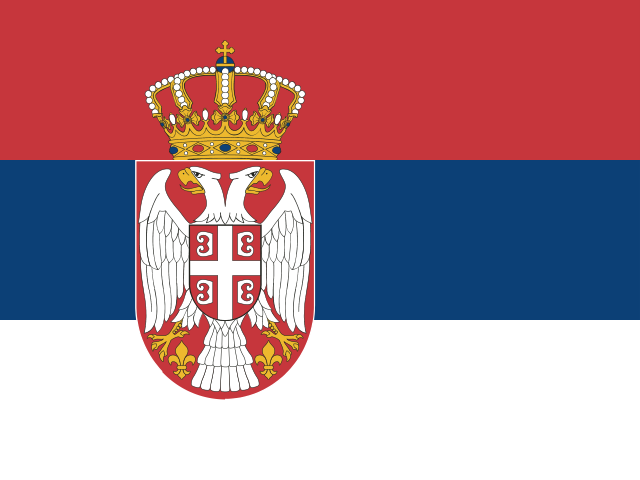 RS
RS- Subskrybenci
- 193k
- Wyświetlenia
- 2 · 0 ulubionych
- Egzemplarze
- 0 · 0 graczy
- Na sprzedaż
- 0
Wartość
- Ostatnia sprzedaż
- -
- Wartość odrzucenia
- 5
Następna kolekcja, Zima 2026: Niepospolita
Przy 500k subskrybentach w kolejnych kolekcjach: Rzadka.
Zasubskrybuj kanał, żeby awansowała w kolejnych kolekcjach!
Teya Dora, an exceptional artist from Belgrade, Serbia, has taken the music world by storm with her hit single "Džanum," amassing 110+ million global streams. Her musical journey began alongside her father, exploring Serbian folk, Western rock, and pop as a child. Today, she blends modern pop, R&B, Balkan influences, and her native Serbian language. She started playing the piano at age 5, took opera lessons, and won a music scholarship to Berklee College of Music at 16. She then moved to Boston, embracing American culture and refining her singing and songwriting skills before recording her debut track. Teya Dora boasts a massive global Gen-Z following due to her unique style, which balances strength and fragility. Her songs often draw from personal experiences, such as the loss of her father, as seen in "Džanum," where she explores contrasts like good and bad, light and shadow, and freedom and captivity.